

How to Prepare for Online Therapy Without Making It Weird
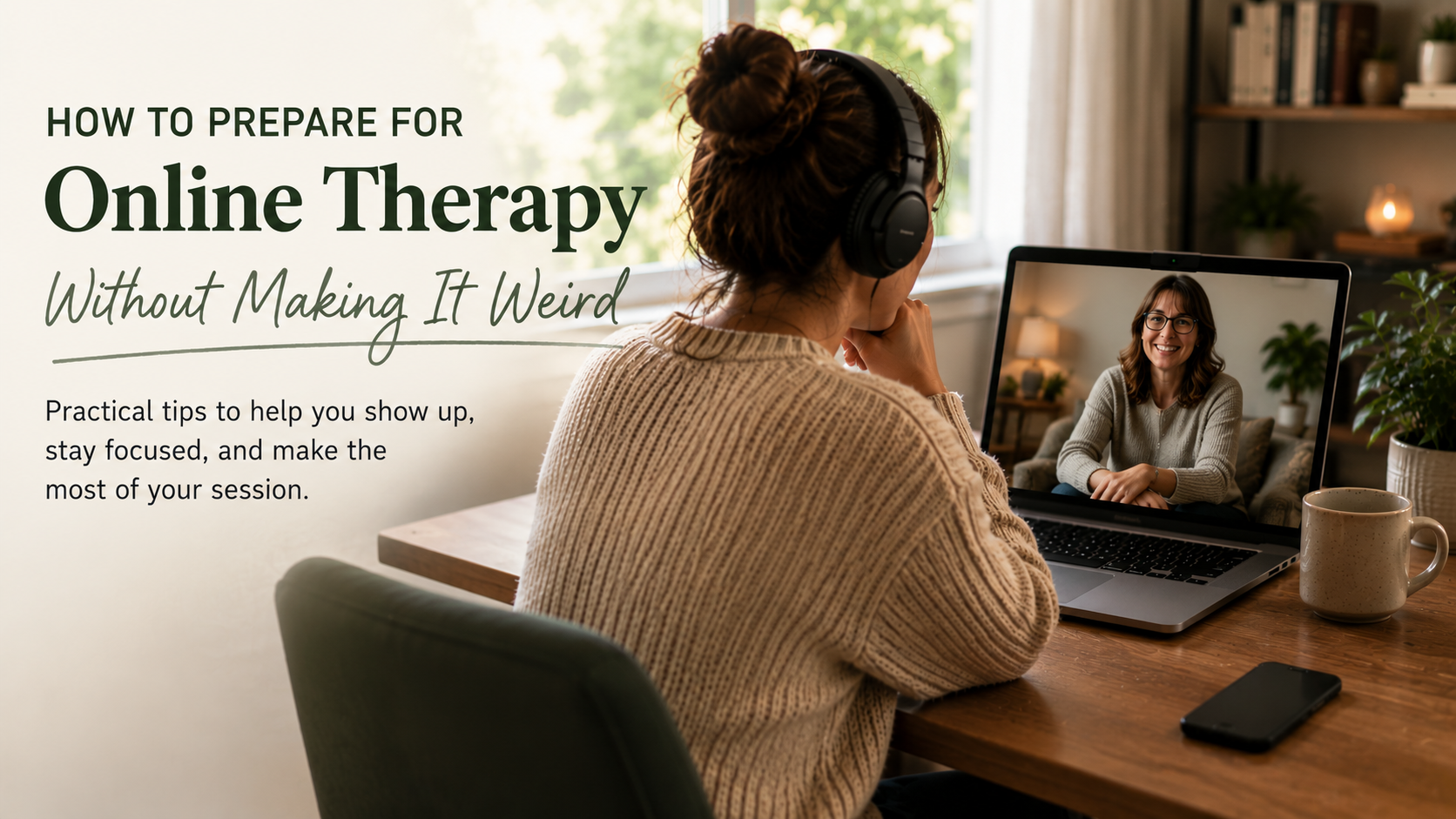
One of the nice things about online therapy is that you do not have to sit in a waiting room pretending not to make eye contact with anyone while soft instrumental music plays in the background.
You can do therapy from your house, your office, your parked car, or occasionally from a closet. People get creative.
Virtual therapy usually works surprisingly well, but it does work better when you set yourself up thoughtfully for it. It doesn’t have to be perfect. Nobody needs a Pinterest-worthy therapy setup. You just want to avoid spending half the session fighting your phone, your internet connection, or the chaos happening around you.
Headphones make a much bigger difference than people expect. If you have headphones with a built-in microphone, use them. They improve privacy, make it easier for you to hear your therapist clearly, and make it easier for your therapist to hear you. This becomes especially important if you are doing therapy from somewhere semi-public, like your car, your office, or a house where other people are wandering around in the hallway. Your voice may not carry, but the audio from your speakers definitely will.
Noise cancelling - yes or no? It can also help quite a bit if background noise distracts you easily. This is especially true if you are in a busy house, parked somewhere noisy, or living beside someone who seems to rebuild motorcycles recreationally. At the same time, some people prefer turning noise cancelling off during therapy because they want to be able to hear if someone enters the room. There isn’t really a right answer there. The goal is just helping your brain settle enough to focus.
If you attend therapy from your car sometimes, keeping your phone cool matters more than people realize. Phones overheat surprisingly fast during telehealth sessions, especially when they are sitting in direct sunlight while running video and cellular data at the same time. Once that happens, sessions start freezing, glitching, lagging, or shutting down entirely. Using one of those windshield visor things helps a lot. Mounting your phone near an A/C vent also helps. Honestly, doing both is ideal if it is hot outside. Direct sunlight on your phone screen is your enemy here.
Checking your internet speed before session can also save a lot of frustration. Google has a quick, free speed test that takes maybe thirty seconds. If your Wi-Fi has been acting strange all day, there is a decent chance therapy is not going to be the moment it suddenly pulls itself together. The same goes for relying on cell service. Two bars and optimism are not enough.
If you are not at home or work during session, make sure you know the address of where you are. Therapists are required to know your location during telehealth sessions in case an emergency happens and help needs to be sent to you. This mostly becomes relevant when someone is parked in a random shopping center parking lot somewhere and suddenly realizes they have absolutely no idea what the address is.
Privacy matters, too. Nobody expects perfect silence. Dogs bark. Kids interrupt things. Someone inevitably starts mowing their lawn at the exact moment you begin talking about something emotionally difficult. Life happens. Still, it helps to reduce interruptions where you reasonably can. Closing and locking the door, silencing notifications (Do Not Disturb is your friend), letting people know you will be unavailable for an hour, and avoiding heavily trafficked areas all make a difference.
Things to Avoid During Session:
Going to the bathroom during session. Yes, people do this. No, you shouldn’t be one of them. Don’t make it weird.
Driving. No, seriously. It’s not safe. Don’t try it. We’ll have to end the session.
Attending session without clothes on. This feels unnecessary to say, but here we are.
Having someone else sitting in the room or walking in and out of the space you’re in.
Trying to work and do therapy at the same time. Like I said, notifications off.
Coming to therapy intoxicated. Just because you are attending from home does not mean session should double as happy hour.
Walking around large stores discussing your trauma beside unsuspecting strangers.
Making loud noises directly into the microphone, like eating crunchy food, tapping on the mic, twirling the cord with the mic on it, etc.
Mostly, the goal is just creating enough space that you can actually settle into the conversation instead of half-existing in six other tasks simultaneously.
You do not need a perfect setup. You do not need ideal lighting, a spotless house, or one of those beautifully curated backgrounds that makes it look like you film productivity content for YouTube. You just need enough privacy, enough internet stability, and enough room mentally to show up honestly.