

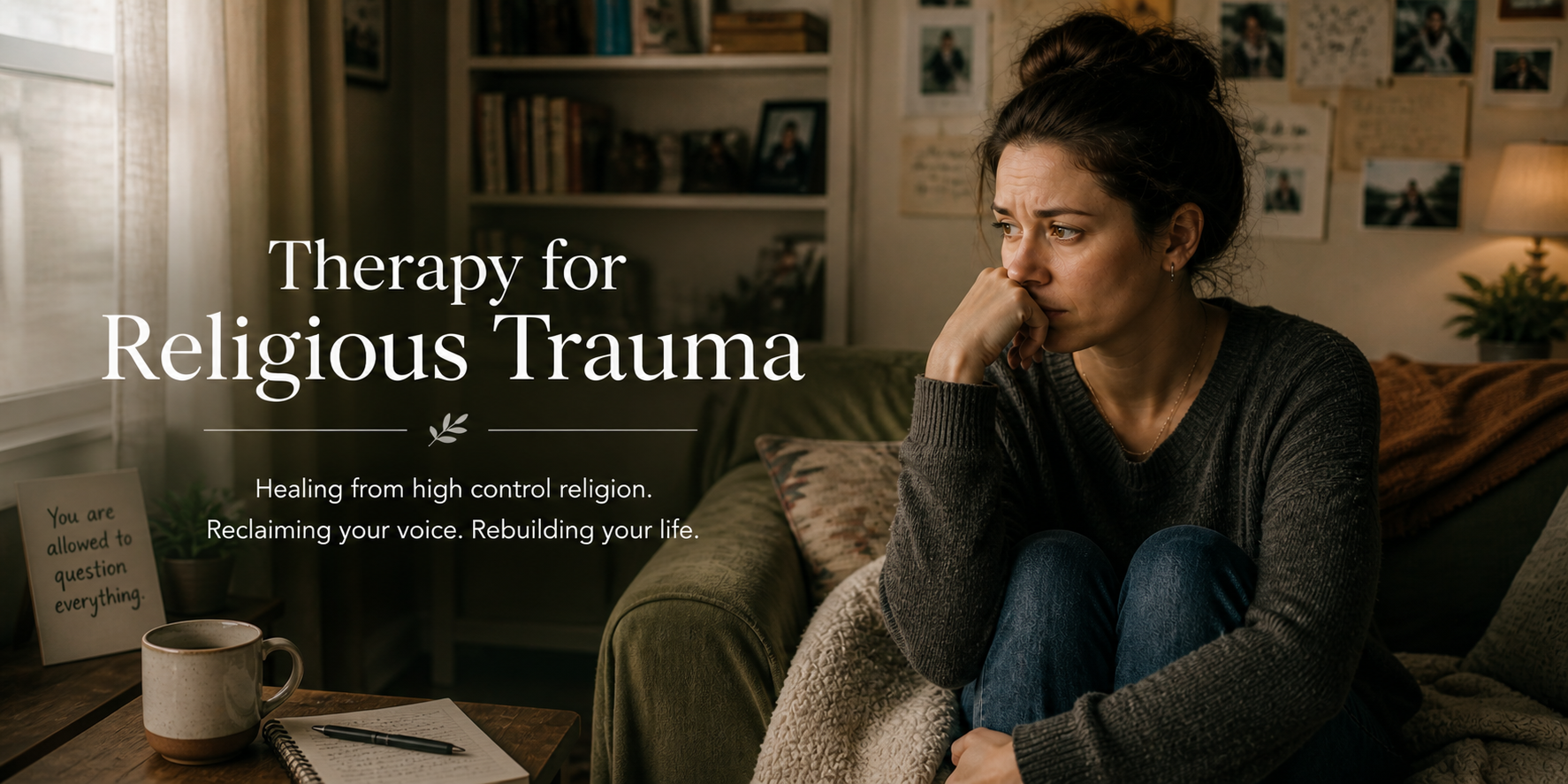
Therapy for Religious Trauma
I didn't set out to specialize in religious trauma — but over time, this work found me.
As more people came looking for a secular therapist who understood what it actually means to leave a religion, I found myself working with individuals from all kinds of backgrounds. Some had come from high-control groups or more insular communities. Others had grown up in more mainstream faith traditions that had slowly stopped feeling safe, supportive, or true to who they were becoming.
Whatever the path, the experience of leaving - really leaving - tends to be disorienting in ways that are hard to put into words if you haven't lived it. You might find yourself asking what you actually believe now, or whether any of it matters. You might not know who's safe to talk to, or what gives your life meaning outside the framework you grew up in. When you've spent years, often your entire life, inside a specific belief system, questioning it can feel isolating, confusing, and at times, completely overwhelming.
If you've stepped away but your family or community is still deeply involved, things can feel even more complicated. There may be strong expectations about how you should live, pressure to return or conform, or a fear of judgment and losing connection with the people you love. Even ordinary interactions can start to feel tense, and healing becomes harder when those dynamics are still active in your life.
Some people I work with also carry experiences that are difficult to talk about - things others don't fully understand. Depending on your background, you might have grown up with a very different education than your peers, missed out on things that felt normal to everyone else (certain music, media, relationships, independence), or been taught to distrust your own thoughts and instincts. For some, there were also experiences of abuse, sometimes followed by messages that it was your fault, connected to sin, or evidence that you weren't good enough.
Those messages don't just fade when you leave. They tend to show up as deep shame, chronic guilt, a fear of getting things wrong, or a quiet sense of being fundamentally flawed. The environment may be in the past, but the patterns it created are often still very much present. The good news is that they can be understood, processed, and changed. You don't have to stay stuck in them.
Healing from religious trauma is real and possible. People do rebuild their sense of self, develop their own values, and learn to move through the world with more clarity and confidence while feeling less reactive and less burdened by old messages about who they're supposed to be.
You don't have to do that work alone.
If you're looking for support in working through religious trauma or navigating life after a high-control religious experience, you're welcome to learn more about working together here.