

Feel to Heal: Why Avoiding Emotions Keeps You Stuck
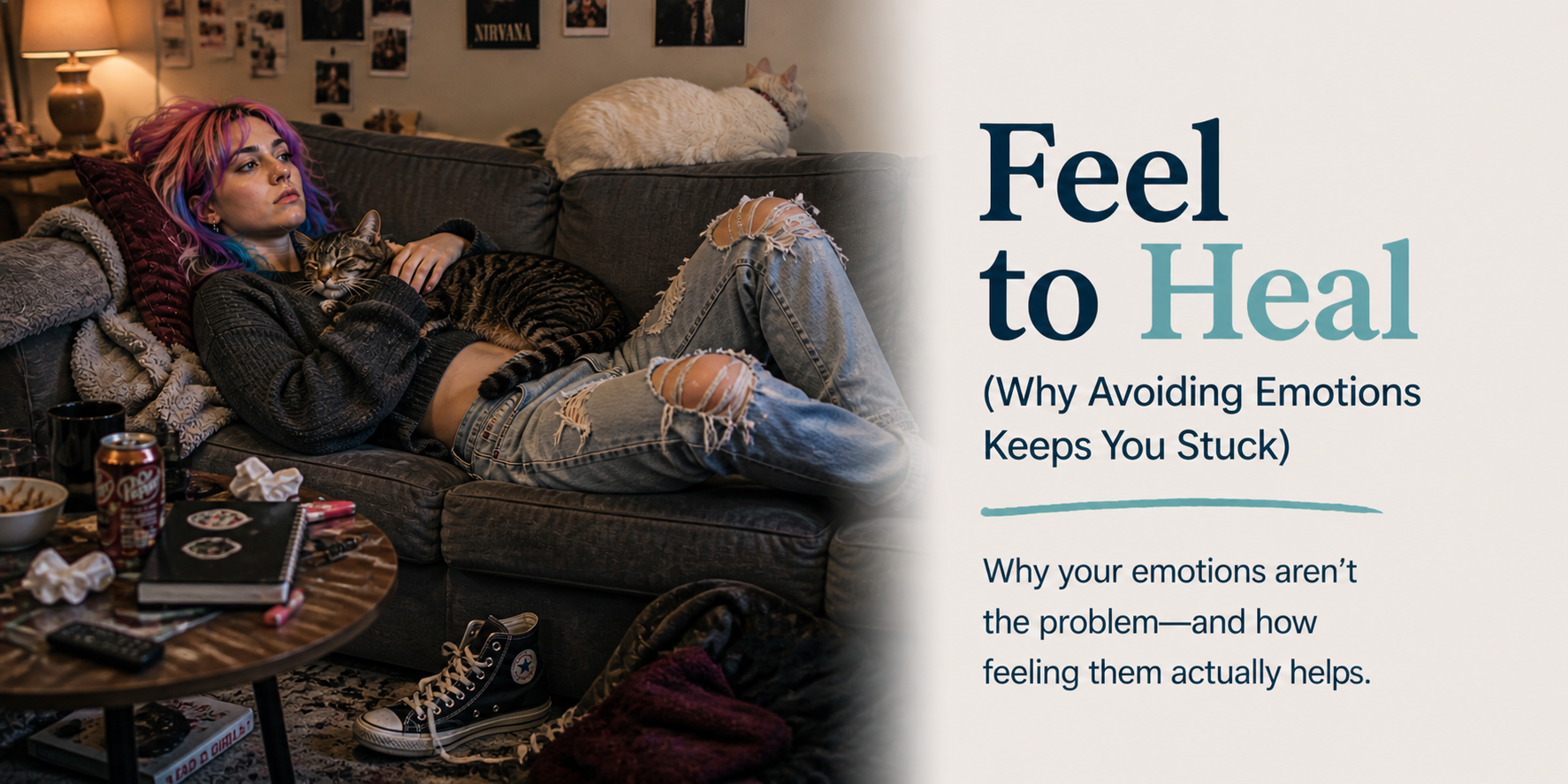
Fairly often, I hear people say they don't want to have to think about difficult things that have happened to them. They want to avoid those feelings, and sometimes they want to know how to do that more effectively.
It's not surprising that they don't love my response: you usually have to feel it to heal it.
Why Avoidance Is So Appealing (And Why It Backfires)
Emotional avoidance can seem like a genuinely good plan. If I just don't think about it, if I stay busy enough, if I just push past it, I'll be fine. And here's the thing: that actually works, for a while. There's a real short-term payoff to convincing yourself you're okay and moving forward. That's a big part of what makes avoiding emotions so appealing.
The problem is that difficult emotions don't simply dissolve because we refuse to engage with them. Research on emotional suppression consistently shows the opposite. When we chronically avoid painful feelings, they tend to intensify over time, not fade. They show up in other ways: physical tension, anxiety that seems sourceless, emotional numbness, irritability, depression, difficulty in relationships, or a low-level sense that something is just off.
The feelings are still there. They're just waiting to come out sideways, usually at the worst time or towards someone you don’t mean to lash out at.
Avoidance also has a compounding effect: the longer we avoid something, the more threatening it tends to feel. The mountain grows. What might have been manageable to process earlier becomes something we're increasingly afraid to approach, not because the original wound got bigger, but because the avoidance itself has made it feel bigger.
What Feeling Emotions Actually Looks Like
Processing difficult emotions doesn't mean wallowing in them indefinitely or ripping off every bandage at once. It means moving through them rather than around them, at a pace that's sustainable for you.
What that looks like is different for everyone. Some options:
Sitting with it. Sometimes simply giving yourself time and space to feel what you feel without judgment, without trying to fix it is enough. Emotions are designed to move through us when we let them. Sometimes grounding can be helpful if you’re struggling to stay present while feeling your feelings.
Creative expression. Art, music, movement, and writing can all give form to feelings that are hard to put into words. Many people find that expression through a creative outlet allows them to process things they couldn't access through direct reflection.
Talking it through. Sometimes you need to say it out loud to someone else. That might be a trusted friend or family member, or it might mean working with a therapist who can help you make sense of what you're experiencing.
Body-based approaches. Trauma and difficult emotions are often held in the body, not just the mind. Somatic and movement-based therapies can be particularly effective for things that don't respond well to talk alone.
Specialized therapy. For feelings you're really struggling to access or move through, approaches like Brainspotting work at a deeper neurological level to process emotions that have become stuck.
Therapy Approaches for Processing the Hard Stuff
There are many evidence-based therapies designed to help people work through difficult emotions and experiences. Each person is different, and what works well for one person may not be the right fit for another. Here are some worth exploring if you're struggling with overwhelming or avoided emotions:
Ready to Stop Avoiding?
Starting therapy can feel daunting, especially if you've been avoiding difficult feelings for a long time. If you're not sure what to expect, my post on getting started in therapy walks through what the process typically looks like.
If you know it's time and you've just been putting it off, the next step is finding the right therapist. It's completely reasonable to do a lot of research before you choose someone, and it's a good idea to have a few therapists in mind so you have options if one doesn't have availability that works for you. Here's some guidance on finding a therapist that feels like the right fit.
Got your list? Reach out. The longer we avoid the feelings, the harder they are to carry — and the longer they stay with us. You don't have to keep carrying this alone.