
What Is DBT? A Simple Guide to Dialectical Behavior Therapy and Its Life-Changing Skills
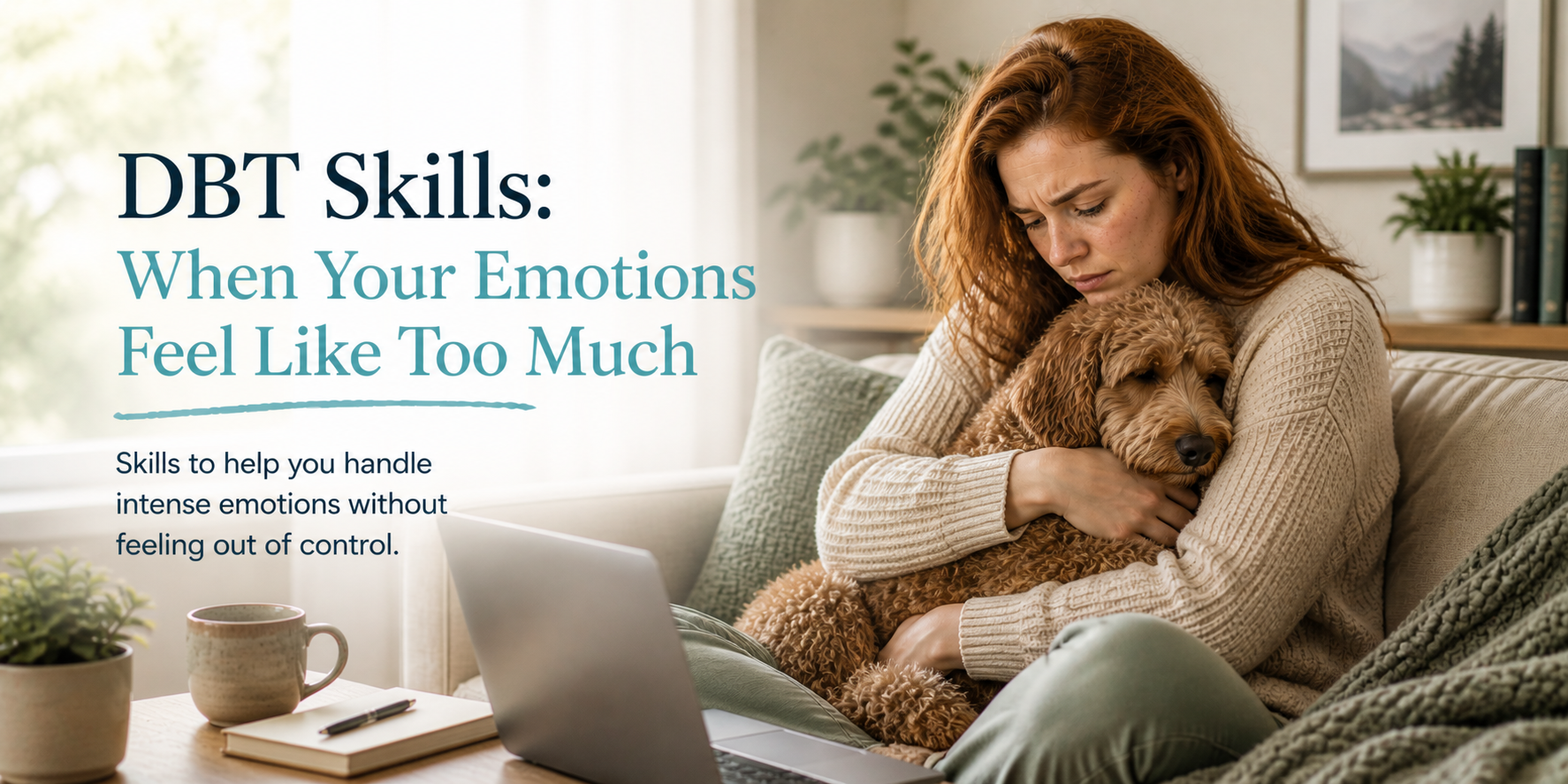
Dialectical Behavior Therapy. Those three words left me baffled the first time I heard them used together. Dialectical - what does that even mean? It's easy to get turned off by the name alone.
Here's the good news: most of us don't need to know what a dialectic is (though I’ll be happy to teach you!). What we need are DBT skills, and the even better news is that you're probably already using many of them without realizing it.
What Is DBT?
DBT is a structured, evidence-based therapy originally developed to treat borderline personality disorder, but it has since proven effective for a wide range of challenges, including anxiety, depression, trauma, relationship difficulties, and emotional dysregulation.
At its core, DBT teaches practical, concrete skills organized into four areas:
Mindfulness
Distress Tolerance
Emotion Regulation
Interpersonal Effectiveness
Let's break each one down.
1. Mindfulness
Mindfulness is the practice of participating in something fully and from a balanced place in your mind. In our modern lives, distractions are everywhere: notifications, smart watches, the constant pull of a screen. When we're mindful, we deliberately push those distractions aside to stay present with what we're actually doing.
When is the last time you spent time with someone and were fully there: no texts, no scrolling, no half-listening? If it's been a while, you're not alone.
The payoff is real, though. Try eating a food you love while focusing only on that experience. Play with your child, or have a conversation with a friend, with no distractions. You get so much more out of those moments when your attention is truly there.
Mindfulness is the foundation of DBT: it underlies all the other skills.
2. Distress Tolerance
Distress Tolerance skills help us get through an emotional crisis without making it worse. Think back to the last real crisis you faced: a loss, a rupture in a relationship, a moment of total overwhelm. How did you handle it? What do you wish you'd done differently?
Distress Tolerance gives us a concrete toolkit for those moments.
Here's a personal example. I have a full-blown phobia of snakes. Irrational, I know, but very real. I don't like pictures of them. I change the channel. I didn't even enjoy typing the word just now.
A few years ago, I was supervising a children's group on a playground when a snake came slithering in. A tiny baby snake that all the kids thought was amazing. I, on the other hand, wanted to panic, run inside, and climb on top of a table. Obviously, that wasn't an option. So instead, I started an energetic game to move the group away from the intruder and quietly texted a coworker to handle the situation. The kids were safe. I didn't have a heart attack. My coworker got a great laugh out of it, and still brings it up occasionally. It was a good outcome.
Without realizing it, I had used two Distress Tolerance skills at once: distraction (redirecting the group's attention) and vigorous exercise (which helps burn off the adrenaline your body releases in a crisis).
I always recommend having at least two solid Distress Tolerance skills ready to go because you never know when something's going to show up on your playground.
3. Emotion Regulation
Emotion Regulation is about two things: building a healthy emotional baseline and having skills to manage reactions that aren't serving you well in the moment.
The foundation here is surprisingly simple: take care of yourself. Sleep. Eat. Rest. It sounds obvious, but most of us aren't doing it consistently, and it matters more than we realize. When we're exhausted, stressed, and running on empty, our emotional reserves are depleted. Small things become big things. We react instead of respond.
I'll share an embarrassing but very real example. One day I came home after a long shift, sleep-deprived, skipped lunch, and extremely hungry. I opened the takeout I'd picked up on the way home and discovered it was completely wrong. It was something I couldn't even eat. I burst into tears and found myself completely unable to make a decision about what to do next.
My well-rested, fed, rational self finds that reaction absurd. But in that moment, I had nothing left in the tank. Emotion Regulation skills - specifically Opposite Action - would have nudged me to push through the discomfort and just feed myself somehow, rather than giving up and going to bed hungry.
What's useful about Emotion Regulation is that it works both ways: preventatively (building habits that keep your baseline healthy) and reactively (giving you tools to manage in the moment when things go sideways).
4. Interpersonal Effectiveness
Interpersonal Effectiveness is the skill set most people assume they already have until they take a closer look.
It breaks down into three core areas:
Asking for what you want or need effectively
Maintaining your relationships over time
Setting limits and boundaries in a way that sticks
Relationships are complicated: romantic, family, work, all of it. Having a structured guide for difficult conversations can make an enormous difference, especially when you have the chance to prepare ahead of time.
For example: imagine a coworker who constantly asks for your help on their projects. You've tried to say no, but somehow you always end up agreeing anyway. Interpersonal Effectiveness gives you a concrete framework for setting that boundary and actually maintaining it.
In my practice, these skills show up as some of the most transformative for clients, regardless of what originally brought them to therapy. Better communication affects anxiety, depression, self-esteem, and so much more. Relationships touch everything.
Who Can Benefit from DBT?
In my experience, DBT is the most practical and widely applicable therapy approach I've studied. It was designed to be skills-based and teachable, which means it translates into real life in a way that a lot of therapy doesn't always manage.
DBT can be helpful for people dealing with:
Emotional dysregulation
Relationship difficulties
Perfectionism that leads to stress and burnout
Anyone who wants better tools for managing the hard parts of life
You don't need a specific diagnosis to benefit from learning DBT skills. I genuinely believe most people would find something useful here.
Curious About DBT?
DBT can sound intimidating at first. The name alone is a mouthful, but with time and practice, the skills become second nature. They're things you can use every day, not just in a crisis.
If you're wondering whether DBT might be a good fit for what you're working through, I'd love to talk. Feel free to reach out by clicking the Schedule Now button and we can explore it together.