

Using Gratitude to Change Your Brain (Without Toxic Positivity)
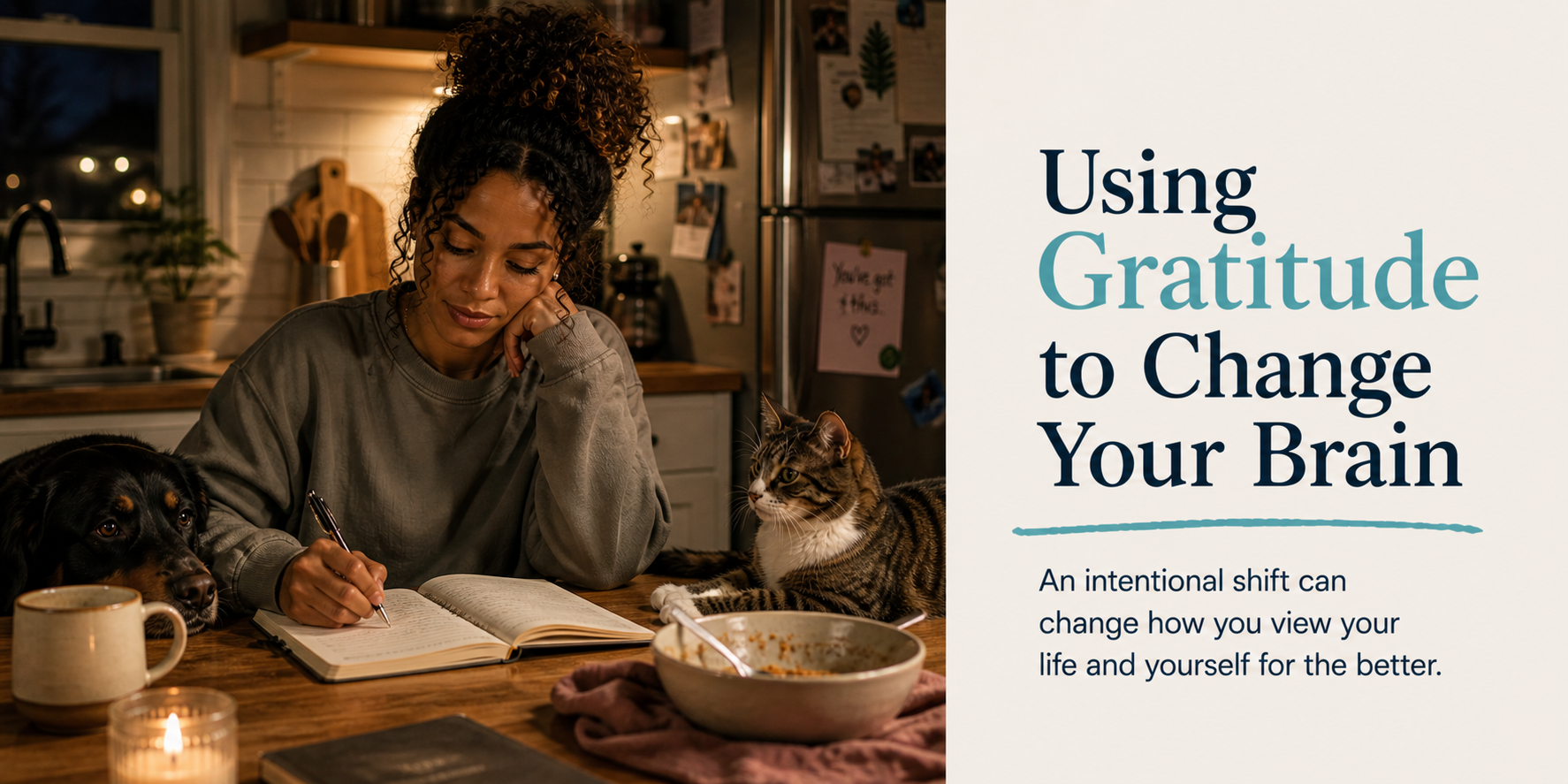
Wishing you a Happy (and Grateful!) New Year!
Most of us think of gratitude as a nice habit: something polite, something our parents taught us. What the research actually shows is something far more significant: gratitude practice measurably changes the way your brain works.
Studies on gratitude and mental health have found that people who practice gratitude regularly sleep better, experience decreased levels of pain, stress, anxiety, and depression, and report higher energy levels. The effects aren't subtle, and they aren't placebo. Choosing to consistently and intentionally orient your mind toward gratitude reshapes the lens through which you experience your life and yourself.
That's not a small thing. For people struggling with depression, anxiety, or toxic perfectionism, it can be genuinely transformative.
Why Gratitude Is Harder Than It Sounds
Gratitude seems easy. You're thankful for your home, your dog and cat, a good meal, the people you love. Simple, right?
The challenge, and where the real mental health benefits live, is in finding gratitude for the harder things. The frustrating things. The people and circumstances that test you. The parts of yourself you struggle to accept. It might be hard to be grateful for any part of yourself at all, depending on the messages you grew up receiving about yourself.
When I first ask clients what they're grateful for, most start with the same answers: family, friends, a job, a place to live, and those things absolutely deserve gratitude. But when we stop there, we're only scratching the surface of what this practice can do.
Traffic on the way home. An angry customer. One more task on an already-overloaded to-do list. Dinner that didn't turn out. These are the moments where gratitude feels impossible, and where practicing it matters most.
What if, instead of focusing on those frustrations, you looked for the lesson in them? What did a difficult situation teach you? What strength did it require you to utilize? That reframe is where gratitude starts to do its deeper work on your mental health and self-perception.
Gratitude and Self-Esteem
One of the less-discussed benefits of regular gratitude practice is its effect on how we see ourselves.
When we're caught in patterns of self-criticism or low self-worth, our attention tends to narrow. We focus on what we did wrong, what we lack, where we fall short. Gratitude practice interrupts that pattern. It trains the mind to look for evidence of good things, including good things about ourselves, like our resilience, our effort, our growth, the positive impact we have on others, or the things we can physically do, like giving a comforting hug to a friend or putting together a piece of furniture.
Over time, this shift in attention can meaningfully improve self-esteem. We don’t use empty affirmations. We use the practiced habit of noticing what's actually true and good, and in doing so, we shift our focus to what we can do and be.
How to Build a Gratitude Practice That Sticks
Gratitude needs to be regular and intentional to deliver its full benefits. A once-in-a-while appreciation for your coffee isn't quite what the research is pointing to. Here's how to make it a real practice:
Start small. Each day, find three things you're grateful for. To keep it from becoming rote, try choosing one person or thing, one experience, and one thing about yourself. This structure pushes you to look across different areas of your life rather than defaulting to the same answers every day.
Find a consistent time. For me, evenings work best. Distractions are naturally winding down, and it gives me a chance to review the day. What went well? What could I have handled better, and what did I learn from it? Who made a positive impact on me today? The nighttime ritual also tends to improve sleep, which is its own mental health benefit.
Go deeper over time. As the practice becomes more comfortable, expand beyond the easy answers. Look for gratitude in difficult relationships, frustrating circumstances, and personal setbacks. Ask yourself what those experiences gave you, even if it wasn't what you wanted.
A New Year's Gratitude Practice
As we head into a new year, I want to offer you a specific exercise to try.
Look back over the past twelve months. For each month, identify at least one person, experience, or thing you were genuinely grateful for. Then (this is the part I love) add it to your calendar for that same month next year as a reminder.
Not just to remember that specific thing, but to remind yourself to keep looking. To stay in the practice of noticing what's good, even in hard seasons.
Gratitude isn't a personality trait you either have or don't. It's a skill. And like any skill, it gets stronger the more you use it.
Here's to a new year full of things worth noticing.
— Happy New Year!