

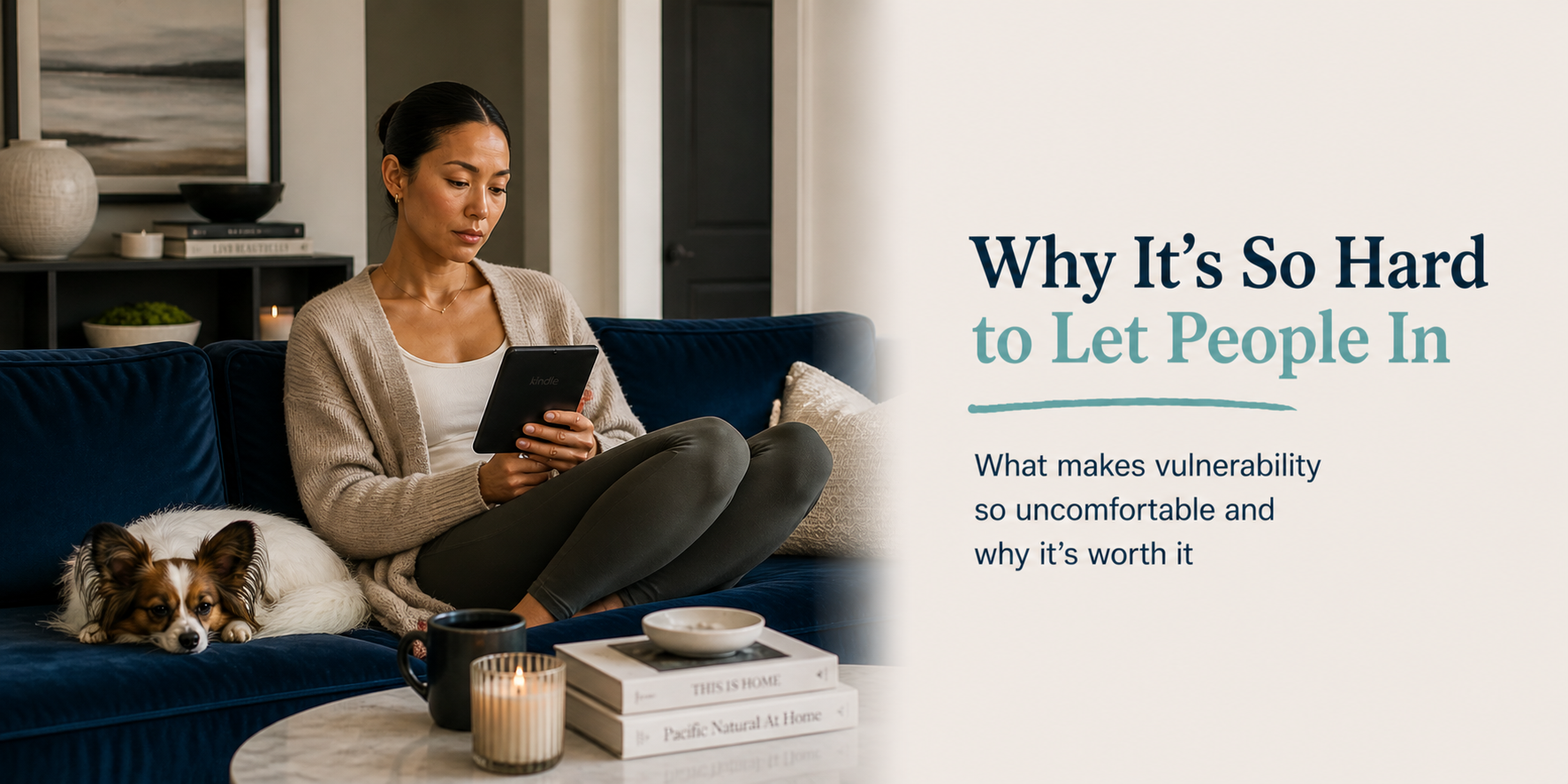
Vulnerability just sounds scary, doesn't it? Opening yourself up, sharing the parts of yourself that feel fragile, knowing you could get hurt for doing it. That sounds terrifying to most people, and our culture doesn't help. Vulnerability is often framed as weakness, as naivety, as giving someone ammunition to use against you.
But what if that framing is exactly backwards?
We Are Wired for Connection
From an evolutionary standpoint, humans are not designed to go it alone. We survived as a species because of close relationships: groups that protected each other, relied on each other, looked out for each other. On our own, we were vulnerable in the dangerous sense. Together, we were resilient.
Modern life has changed the practical necessity of that, but it hasn't changed the wiring. We still need genuine connection to thrive.
What has changed is that technology has given us a convincing substitute. We can feel connected to hundreds of people we haven't actually spoken to in years. I know the highlights of my high school classmates' lives, their kids' milestones, and their vacation photos, and we haven't directly communicated since graduation. It creates a sense of community that isn't quite real: news bulletins without actual knowing, follows and likes without genuine closeness.
That kind of connection doesn't fill the need. It just makes it harder to notice that the need isn't being met, and can even reinforce our fear of vulnerability because our real lives might not measure up to the images we see online.
What Makes Letting People In Difficult
For many people, the barrier to vulnerability isn't simply fear of rejection. it's toxic perfectionism. When you've built your sense of safety around presenting a flawless version of yourself, the idea of letting someone see your struggles, your uncertainty, or your unfinished edges feels genuinely threatening. Perfectionism whispers that you'll only be accepted if you're impressive, capable, and in control, which means that real vulnerability, the kind that actually builds connection, feels like an unacceptable risk. The painful irony is that the curated, polished version of yourself you're protecting is also the thing keeping you from being truly known.
This dynamic shows up especially often in people navigating high-functioning anxiety. On the outside, everything looks fine, maybe even exceptional. But internally, there's a constant hum of worry, overanalysis, and self-monitoring that makes it exhausting to let your guard down. When you're already working hard to hold everything together and appear composed, vulnerability can feel like one thing too many to manage. Recognizing that pattern - the performance of “okayness” that sits on top of real struggle - is often the first step toward being able to share more authentically with the people in your life.
What Shallow Connection Costs Us
When we keep everything on the surface, sharing only what feels safe, presenting only what we want people to see, we build acquaintances, not relationships. People who are enjoyable to spend time with, but who don't really know us. A social circle that functions fine in the good times but isn't built to hold anything heavier.
This has real mental health consequences. Loneliness and social isolation are consistently linked to higher rates of depression and anxiety, and the research on this has only grown stronger over time. The issue often isn't a lack of people in someone's life. It's a lack of depth in those connections. When we build and maintain emotional walls, we end up keeping everyone out and keeping ourselves locked inside. That’s a clear way to create a lonely life without the support you need.
Knowing you have someone to call when you're struggling - someone who will pick up, who will sit with you, who genuinely knows what you're going through - is qualitatively different from having a large social media following or even a busy social calendar. Being truly seen and known by even one or two people matters enormously for mental health and emotional resilience.
How to Actually Build Deeper Connections
The first step is deceptively simple: spend real time with people. Not scrolling through their feeds. Actually being with them. Dinner, a walk, coffee, a class you take together. Shared time in person, where conversation can go somewhere real.
The second step is where vulnerability comes in, and it doesn't have to be as terrifying as it sounds.
You don't need to share everything with everyone - walking around with your heart perpetually on your sleeve, opening up to every person you meet. That's not the goal, and it's genuinely not a good idea. Vulnerability works best when it's intentional and gradual, offered to the right people in the right amounts over time.
Here's a practical way to think about it: start small and gauge the response.
With someone you want to know better, share something that feels relatively safe first, like a dream you have, a goal you're working toward, an opinion you feel a little uncertain about. Watch how they respond. Do they take it seriously? Do they reciprocate? Do they show up for you?
If the answer is yes, you've learned something important: this person may be trustworthy with something bigger. Over time, you can gradually let them in on things that feel scarier, like your struggles, your fears, the parts of yourself you usually keep hidden. Each small act of vulnerability that's met with care becomes evidence that it's safe to go a little deeper.
Before long, you find yourself in a relationship where you feel genuinely known. That's not a small thing. That's one of the most protective factors available for mental health.
Why Vulnerability Is Actually Strength
Choosing to be vulnerable with someone even knowing you could be hurt, and opening up anyway, requires courage. It requires self-awareness. It requires trust in your own judgment about who is worth that risk.
That's not weakness. That's one of the harder things a person can do.
The people who avoid vulnerability altogether aren't protected from pain. They're just insulated from the depth of connection that makes the hard parts of life more bearable. The goal isn't to be invulnerable. The goal is to be discerning about where you place your trust, and then to actually place it.
Real connection is built in those moments of honest, careful vulnerability. And that connection - being truly seen, truly known - is worth the risk.