

How Building Daily Routines Can Boost Your Mental Health
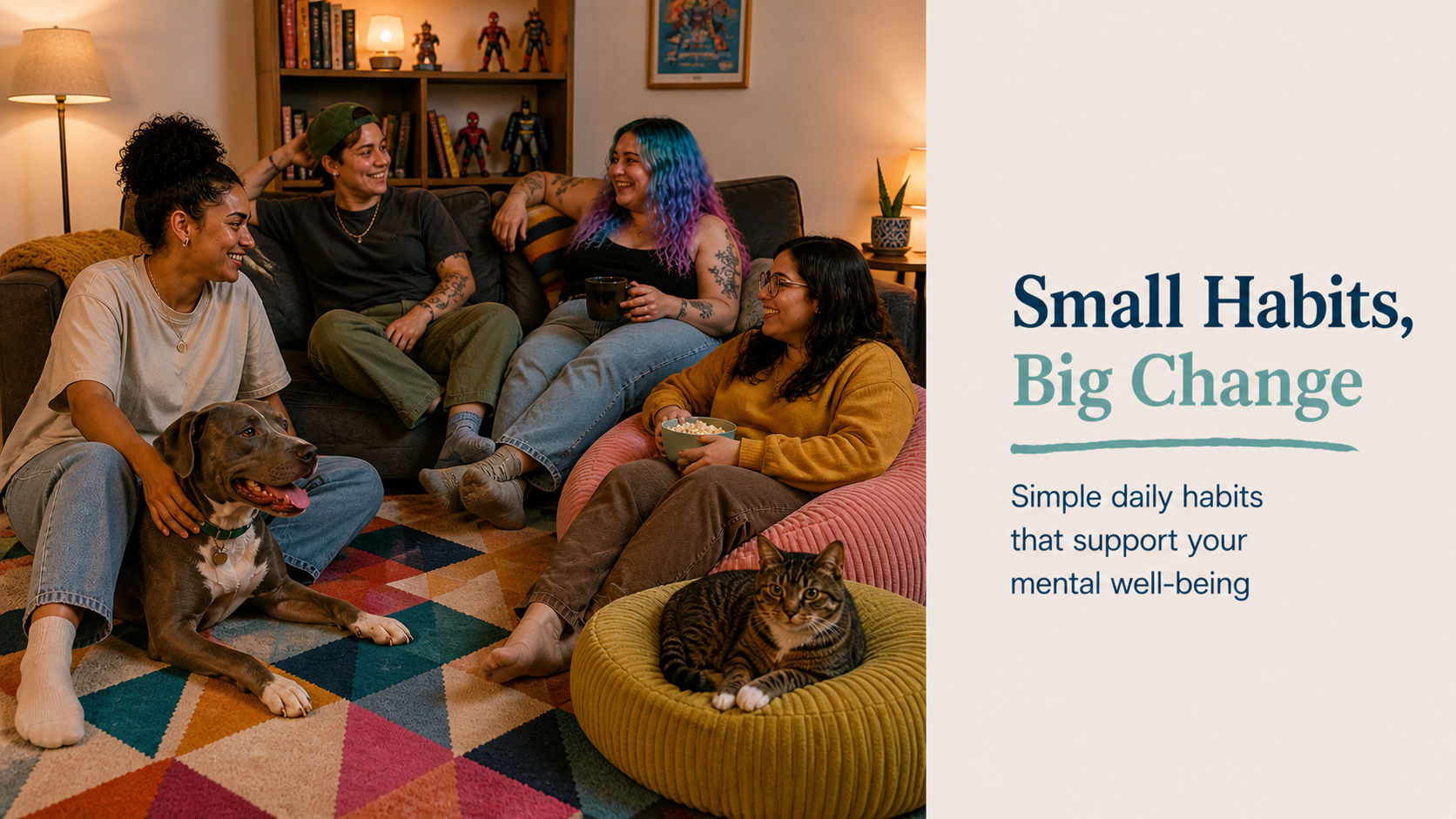
Let me be upfront: this is not a blog post that tells you five specific things to do every day to change your life.
Or at least, it's not exactly that.
The truth is, there are as many good habits as there are people. While there's some generally accepted wisdom around things that help you wake up well or wind down for sleep, nothing works 100% of the time for everyone. What does work for most people is having some routines - a loose scaffolding of predictable moments built into your day.
Why Your Brain Actually Loves Routine
Whether we like it or not, we are creatures of habit. Our brains naturally connect things that occur close together or that we perceive as linked. Psychologists call this conditioning. More than that, our brains genuinely crave routine because routine creates a sense of safety.
When you know what comes next, when you have a basic structure to your day, you have a foundation of security that frees up mental and emotional energy for everything else, such as new challenges, new relationships, and unexpected problems. Without that foundation, the brain is spending background resources just trying to orient itself.
This is why, for many people struggling with depression or anxiety, the lack of routine isn't just an inconvenience. It actively makes symptoms worse. It's why rebuilding routine is often one of the most impactful early steps in improving mental health.
Where to Start: Morning and Evening Routines
The first thing I work on with new clients struggling with depression, anxiety, or both is developing a morning routine and a bedtime routine. What those look like varies enormously from person to person — there's no universal prescription. But there are some principles that tend to hold across the board.
Morning
A good morning routine starts with something you actually want to do.
This might be savoring your coffee before looking at your phone. Reading something you enjoy. A short walk, a shower, a few minutes of journaling or meditation, or a workout. The specific activity matters less than the fact that it's genuinely pleasant. You want to choose something that makes getting out of bed feel worthwhile rather than immediately overwhelming.
From there, layer in what you need to do to get your day going. Over time, the sequence becomes automatic, and what was once effortful starts to feel like a natural on-ramp to your day.
The key is that you're starting with something that belongs to you, before the demands of the day take over. That small act of choosing how your day begins has a meaningful effect on mood and outlook.
Evening
A consistent bedtime routine does two things: it signals to your body that sleep is coming, and it creates a gentle transition out of whatever the day threw at you.
For most people this includes basic self-care, such brushing teeth, washing your face, whatever your version of "getting ready for bed" looks like. Beyond that, the specifics depend on what helps you settle. Some people find that lowering the temperature in their home, dimming lights, or putting their phone in another room makes a real difference. Others rely on reading, a brief meditation, light stretching, or journaling to decompress.
What you want to avoid is a "routine" that ends with you scrolling through your phone until you fall asleep. Scrolling on your phone genuinely disrupts the body's ability to transition into restful sleep. The goal is to end the evening with some version of calm, not stimulation.
Routines Beyond Morning and Night
Routines aren't just for bookending your day. Small, consistent habits throughout the day can reduce the low-level cognitive load that accumulates and wears you down.
Do you misplace your keys regularly? Spend ten minutes looking for your phone every morning? Forget your lunch more often than not? These aren't character flaws. They're signs that your brain is handling too many small decisions in real time. A designated spot for your keys, a consistent place you put your bag, or a Sunday habit of prepping for the week are tiny routines that free up mental bandwidth for things that actually require your attention.
(As for the lunch situation - I'm genuinely still working on a system that sticks. If you crack it, let me know.)
The Part People Skip: Keeping the Routine When You Don't Need It
Here's the thing that often gets missed. Routines are easiest to let go of when life feels manageable and the urgency that drove you to build the routine in the first place has faded.
Don't let them go.
Those routines are likely part of why you're feeling well. Stability, predictability, and a sense of structure aren't just helpful in hard times. They're part of what creates the emotional safety that makes good times sustainable. The goal isn't to use routine as a crisis tool and abandon it when things improve. It's to build a life that has enough structure in it that you're not starting from scratch every time things get hard again.
You're generally in charge of what your routines look like, which means you can shape them to actually fit your life. That's the point. Not a prescribed list of five things, but a handful of anchors, chosen by you, that help your days feel like yours.
When Routine Isn't Enough
Sometimes depression or anxiety makes it hard to build or maintain routines in the first place because the symptoms themselves get in the way. If that's where you are, that's worth addressing directly.
If you're in Tennessee, Florida, Utah, or Ohio and you'd like support building the kind of stability that makes daily life feel more manageable, I'd welcome you to reach out. We can start with a conversation about what's getting in the way and what might actually help. Click the Schedule Now button to schedule your consultation if I have availability.